


Microbial ecosystems
An emerging sector in Bourgogne-Franche-Comté

A network of committed businesses
Cutting-edge interdisciplinary research

Tailored training courses
Agroecology + Fermentation = complementary assets for our region
Whilst agroecology focuses on the upstream aspects of food production, fermentation comes into play downstream to process food in a healthy and sustainable way.
AGROECOLOGY
in Bourgogne-Franche-Comté:
undeniable advantages
for sustainable production
Agroecology and microbes (micro-organisms) are closely linked, as the latter play a fundamental role in soil health, plant nutrition and the resilience of agricultural ecosystems:
- Microbes and soil fertility
Bacteria and fungi break down organic matter and release essential nutrients (nitrogen, phosphorus, potassium). Mycorrhizae (symbiotic fungi) improve the uptake of minerals by plant roots. Certain bacteria (e.g. Rhizobium) fix atmospheric nitrogen, thereby reducing the need for chemical fertilisers. - Natural crop protection
Beneficial microbes (e.g. Bacillus subtilis, Trichoderma) help combat disease by inhibiting pathogens. Certain bacteria produce antifungal substances or stimulate plants’ natural defences. - Pollutant degradation and soil ecology
Soil microorganisms aid in the biodegradation of pesticides and pollutants. They contribute to the carbon cycle, reducing agriculture’s ecological footprint. - Agricultural production and the plant microbiome
Agroecology promotes practices such as composting and intercropping, which enrich microbial diversity. A rich and diverse microbiome enhances crops’ resilience to environmental stresses (drought, disease).
FERMENTATION
in Bourgogne-Franche-Comté:
making the most of agricultural resources
for sustainable food production
Fermentation in the food industry combines tradition with innovation. For thousands of years, fermentation has preserved and enhanced local agricultural produce, adding value to it (cured meats, dairy products, PDO cheeses, sourdough bread, wines, beers, etc.). It allows flavours and textures to develop, offers health benefits, and extends the shelf life of food without the use of chemical additives.
Today, it is being reinvented through biomass and precision fermentation, enabling the creation of new plant-based foods and functional ingredients. Through the action of microorganisms, agricultural raw materials are transformed into alternative protein sources, flavourings, enzymes and fats, whilst improving the taste, texture and nutritional value of products. It also enables the utilisation of by-products, thereby reducing food waste whilst addressing the challenges of sustainability and nutritional personalisation.
A bridge between the heritage and future of food…
Different types of fermentation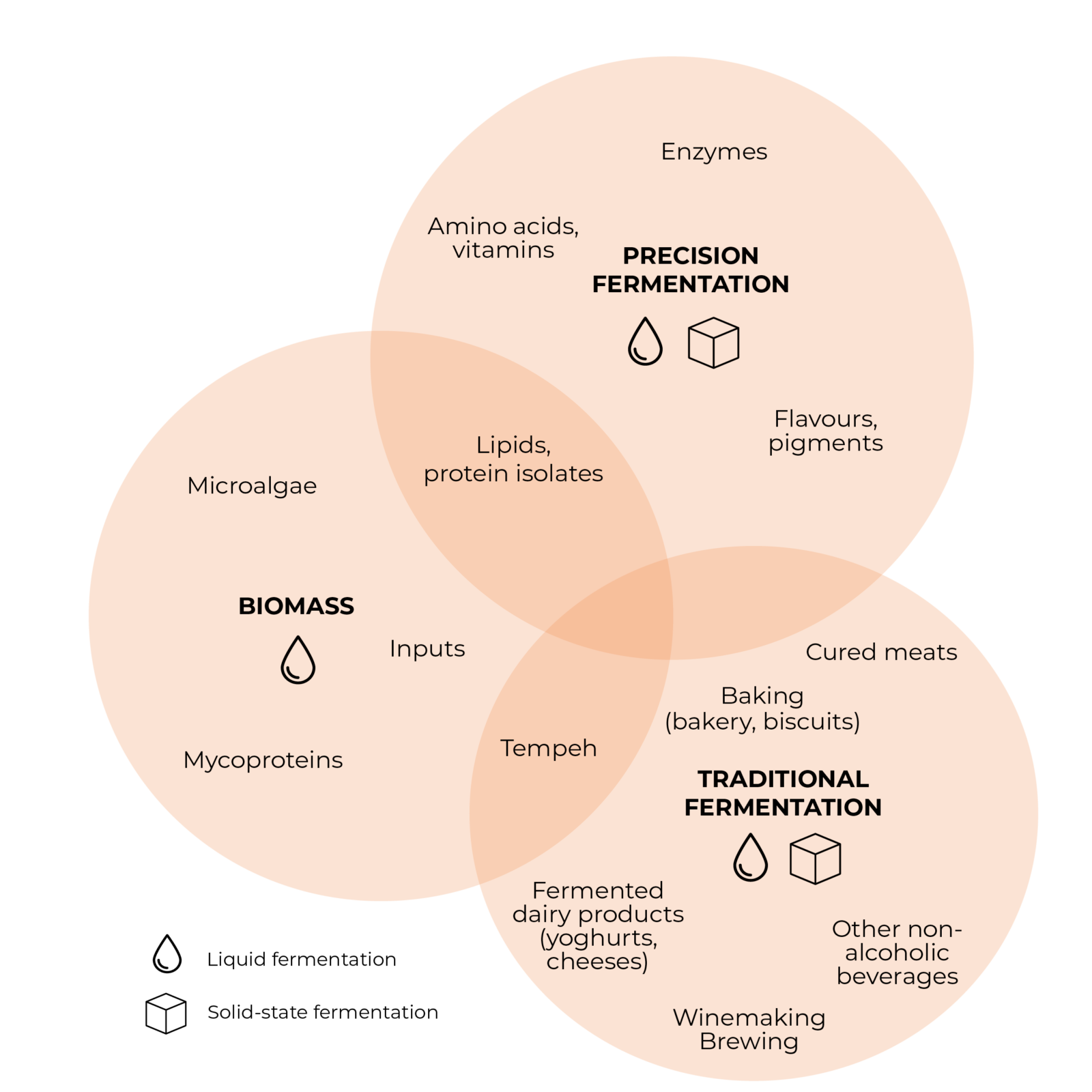
By combining traditional fermentation, biomass and precision technology, it is possible to create hybrid products that combine taste, texture, nutrition and sustainability. These technologies pave the way for more realistic, healthy and environmentally friendly food alternatives, making fermentation a key pillar of the food transition.
Pulses: at the crossroads of agroecological and food security issues
Pulses play a key role in the transition towards more sustainable agricultural and food systems, combining recognised agronomic benefits – such as nitrogen fixation, improved soil fertility and high nutritional value – to support food security.
Pulses: a key issue for agroecology
- Crop diversification
Pulses (lentils, peas, field beans, lupins, soya beans, etc.) are central to the agroecological transition. Incorporating them into crop rotations helps to control diseases and pests and improves the resilience of agricultural systems. However, their diversity remains under-utilised, with soya dominating the market, which limits their potential for diversification and resilience in the face of climate change. - Intercropping
Intercropping with legumes improves soil fertility through nitrogen fixation and reduces the need for fertilisers. It also enhances biodiversity and crop resilience. - Soil fertility and root symbiosis
Through their association with nitrogen-fixing bacteria (Rhizobium), legumes reduce the need for synthetic nitrogen fertilisers. Recent research also highlights their synergy with mycorrhizae (symbiotic fungi): these improve the uptake of phosphorus and water, strengthen soil structure and increase plants’ tolerance to water stress and pathogens. - Reduction in inputs
By fixing atmospheric nitrogen and promoting microbial biodiversity in the soil, pulses help to reduce the use of fertilisers and pesticides, whilst maintaining competitive yields. Their integration into cropping systems is therefore a key driver for low-carbon and resilient agriculture.
Legumes: A Food Issue
- A major source of plant-based protein
Legumes are rich in protein (20–40% of their dry weight) and essential amino acids. Regular consumption of legumes, especially when combined with grains, helps meet nutritional needs while reducing the carbon footprint of the diet (5–10 times fewer greenhouse gas emissions than animal proteins). - Fermentation and digestibility
The fermentation of legumes (tempeh, miso, soy yogurt, fermented fava beans) significantly improves their digestibility, reduces anti-nutritional factors (phytates, oligosaccharides responsible for flatulence), and enriches their nutritional profile (bioavailability of minerals and vitamins). Current research focuses on optimizing fermentation processes to develop alternatives to dairy products (cheeses, beverages) and high-value-added ingredients, while softening the sometimes bitter or “green” flavors of legumes. - Health and innovation
Fermented legumes are a functional food with numerous health benefits. Fermentation improves their digestibility, reduces antinutritional factors, and enriches the food with bioactive metabolites that promote a balanced gut microbiota, cardiovascular health, and metabolic health, thereby helping to prevent chronic diseases. Building on these strengths, innovation in this field is thriving to develop tasty products suitable for all demographics—from athletes to seniors and children—positioning fermented legumes as a key driver of a sustainable, health-oriented diet.
Synergies for the food of tomorrow
In Bourgogne-Franche-Comté, this synergy is reflected in:
- The use of agroecologically sourced raw materials for natural and local fermentation processes,
- The development of initiatives promoting the relocalization of supply chains (e.g., malting facilities and craft breweries, sourdough bakeries, etc.),
- Dynamic research on ferments and microorganisms specific to the regional terroir (AgroSup Dijon, INRAE, etc.),
- Technology platforms to promote research projects and facilitate the creation of startups and new products,
- Specialized training programs serving as a talent pool for recruitment or the launch of startups,
- Economic and gastronomic promotion through the region’s signature products.
An innovation ecosystem that supports these trends
The Bourgogne-Franche-Comté region is distinguished by a network of companies, startups, and research organizations
dedicated to the development of agroecology and fermentation technologies:
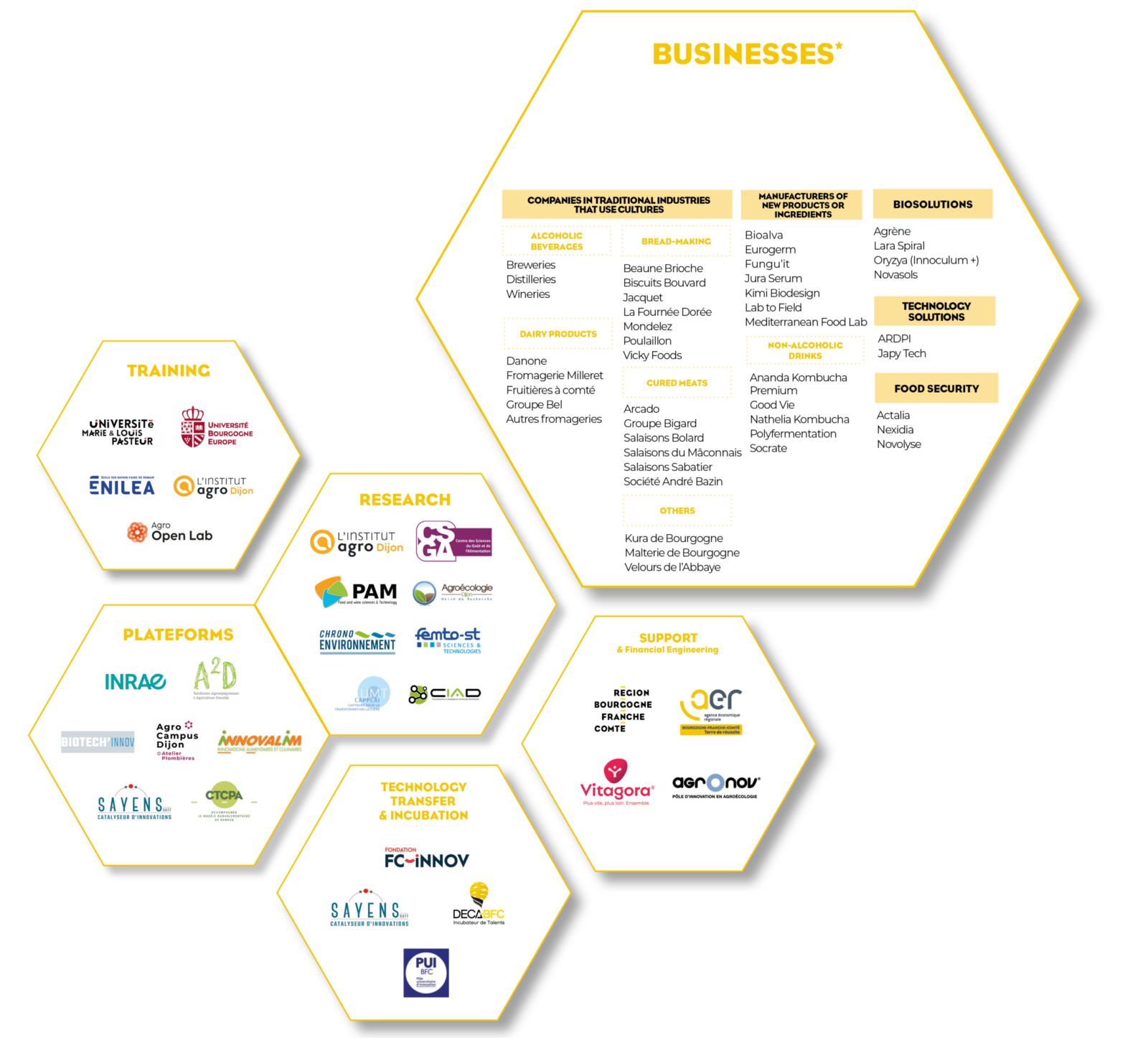
*Non-exhaustiv list
A state-of-the-art scientific and technical environment
Research centres in Bourgogne-Franche-Comté
|
|
|





Technical bodies and platforms
Agroecology
|
|
|

Fermentation
|
|
|


Clusters to support projects
As a competitiveness cluster dedicated to the agri-food sector and providers of cross-sector solutions, Vitagora’s mission is to promote the development, industrial performance and innovation of its members.

A cluster dedicated to innovation in agroecology,
it supports businesses and start-ups in developing sustainable agricultural solutions.
Key programmes and initiatives
HARMI
(Harnessing Microbiomes for Sustainable Development)
This programme is one of the 15 successful applicants in the PIA4 ‘ExcellencES’ call for proposals.
Objective: to gain a better understanding of microbes and their interactions with other living organisms in order to make better use of them in tackling current global challenges.
Budget: €14 million
Stakeholders involved: over 250 researchers from university laboratories at the Université Bourgogne Europe and the Université Marie et Louis Pasteur, the Institut Agro, national research organisations including INRAE and the CNRS, the CHU Besançon Franche-Comté and Dijon Bourgogne University Hospitals, as well as local businesses.

National programme aimed at accelerating innovation in the field of probiotics and microbiomes, with the involvement of regional companies and laboratories
Regional stakeholders involved: INRAE, Institut Agro, Vitagora, Université Bourgogne Europe, CNRS, Supmicrotech-ENSMM, Université Marie et Louis Pasteur, UTBM, Bel, Eurogerm, Fungu’it, Med Food Lab …
Examples of regional start-ups that are innovating
BioAlva
A start-up specialising in the creation of plant-based alternatives to seafood, made from seaweed and pulses. Its main aim is to offer innovative, healthy and sustainable products, particularly for the catering sector (school canteens, hospitals, care homes, etc.), in order to combat overfishing and promote the transition to a more environmentally friendly diet.
Fungu’it
A start-up specialising in FoodTech, recognised for its innovation in the field of alternative proteins. It is developing an innovative solution based on the solid-state fermentation of filamentous fungi using agricultural by-products, thereby providing a local, sustainable and environmentally friendly source of protein.

Kimi Biodesign
A company specialising in the analysis and management of microbial ecosystems. Their expertise is centred on two main areas:
- Assessing the functional capabilities of microbial ecosystems: using robust microbiological profiles, they enable the evaluation of the condition and potential of microbiomes in various environments.
- The development of innovative microbial cocktails: these targeted solutions aim to restore or promote a sustainable functional balance within ecosystems, whether for environmental, agricultural or industrial applications
Mediterranean Food Lab
A company specialising in the creation of natural flavours and culinary solutions based on solid-state fermentation, primarily for the alternative protein and plant-based food industries. Their technology enables the transformation of simple ingredients (pulses, cereals, food industry by-products) into rich and complex flavours, without additives or synthetic ingredients.
Oryzya (Inoculum Plus)
A company specialising in the production and marketing of mycorrhizal fungi and biostimulants for agriculture. Its expertise lies in improving soil quality and promoting biodiversity, particularly through the use of mycorrhizae, which encourage symbiosis between plants and soil fungi. Oryzya also offers specific analysis services to assess soil quality and the presence of mycorrhizal fungi.
AER BFC is here to support you

Amélie DESSOLLE GIORDANO, Food Project Manager, is your dedicated contact at AER BFC. With specialist training and many years of experience in the agri-food sector, she can support you at every stage of your project within the Microbial Ecosystems sector. She has a comprehensive understanding of the regional ecosystem and works with businesses, training centres and research centres.
The support offered by AER BFC takes various forms:
- Meetings with companies facing challenges
- Helping to foster the business ecosystem
- Targeted market research in France and internationally
- Business project development
- Financial engineering
- Land and commercial property
+336.32.83.92.52 – adessolle@aer-bfc.com